Bayerische Staatsoper, München 050114
Scroll downwards for English..
 |
| Ohjelma - The program Photo: me |
Tärkein ensiksi: Jonas Kaufmann lauloi!! <3 Sitä ehdin päivällä jo spontaanisti kyynelehtiäkin, kun hyvät uutiset kuulin. Kävin aamulla toteamassa talon seinästä plakaatista nimensä, ajatellen että kaipa olisivat tuuraajasta siinä ilmoittaneet kun otsakkeena oli "Heute". Oli näetsen pelko pyrstössä ettei ehkä olisi vielä kuntoutunut, kun edellisen esiintymisensä joutui sairastuttuaan peruuttamaan. Onneksi lauloi. Oli upeaakin upeampaa häntä lavalla nähdä ja kuulla. Sielukas, ainutlaatuinen tulkinta.
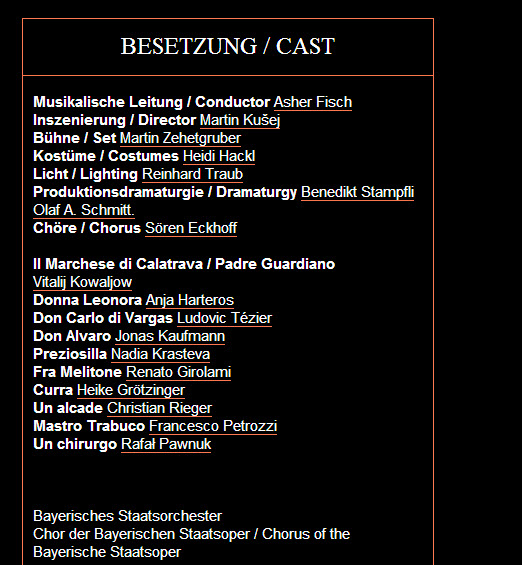
Laulajat olivat kaikki todella huippuluokkaa. Tiesin sen jo nettinähetyksen perusteella, mutta aivan toiselta planeetalta on kuulla heitä livenä. Aijai, oh ja voi! Kyllä hemmotellaan oopperayleisöä Münchenissä!
Preziosillaa laulanut Nadia Krasteva oli nyt miellyttävän tasainen. En havainnut lainkaan niitä hieman kiusallisia kiekauksia jotka kurtistivat kulmiani striimissä. Vahva ja voimakas mezzo, komea ääni. Tapasinkin hänet ovella nimmarijaossa. Oli ihastunut kun kuuli minun tulevan Suomesta. Kertoi tulevansa Savonlinnaan ensi kesänä laulamaan Carmenia. Hmm, varmasti oikein hyvä Carmen, uskon. Vahva, tumma ääni, temperamenttia ja sopivaa näköäkin löytyy, ja kokoa ;) Voisipa vaikka mennä katsomaan..
Basso Vitalij Kowaljowista kaksoisroolissaan Markiisi-isänä ja Isä Guardianona pidin jo paljon häntä ensi kertaa kuullessani. Äänensä on ihastuttavan lämmin. Soinnukas ja syvä. Erittäin kaunis, surun hetkissä varsinkin. Virkistävää sitäpaitsi kuulla syvää kaunista normaalipainoista bassoa, vaikka tiedän ettei olekaan enää niin että matalan äänen edellytyksenä olisi myös suuret raamit.. Rauhallisesta lavaolemuksestaan pidin myös paljon.
Ludovic Tézier Don Carlo di Vargasin roolissa (eikö nyt olisi voinut jotakin muuta nimeä keksiä, sotkeentuuhan näissä don carloissa..) oli niin ikään mielestäni livenä parempi. Hänen äänessään on ajoittain sellainen hieman minua häiritsevä jotenkin ahtaalta kuulostava sointi, ikäänkuin ääni tulisi enemmän nasaalina.. Nyt sekin oli suurilta osin poissa. Vahva, erittäin kyvykäs baritoni. Parhaimmillaan todella komean kuuloinen. Ja kuinka vaivattomasti äänensä soljuukaan. Wau! Erityisesti duetot Kaufmannin kanssa olivat hienoja. Roolinsa on melkoisen epäkiitollinen kyllä, hyviksiin on katsojan aina helpompi samaistua. Carlo on suurimman osan aikaa vihainen ja kostonhimoinen, ei niillä tunteilla yleensä kovin paljon kaunista laulettavaa saa! Aikamoinen kohtalo hänellä, jos ajatellaan että tarina menee niin kuin tässä versiossa tulkittiin, että Carlo on vasta poikanen nähdessään isänsä kuolevan ja että hän siitä lähtien elää elämänsä vain kosto mielessään. Mikä painolasti! Eihän hän saanut mitään mahdollisuutta edes suunnitella itse elämäänsä, piti vain maksaa isien velkaa. Poikaparka! Karmaisevan läheltä riipaisee näitä nykyajan sukukostoja aihe vieläkin..
Eipä saanut Leonorakaan tavallisia kortteja, vaikka oikeastaan kuvio 'rakkaudessa pettynyt neito sulkeutuu luostariin' onkin tuttu. Tässä tarinassa tosin lähtökohdat ovat pikkuisen erilaiset heti kättelyssä, eikä Leonorakaan suostu tarjottuun luostarivaihtoehtoon. Ja ihan oikeista syistä! Joskin aika erikoista lie, että hän pitää luostaria liian turvattomana, avoimena. Erakon luola on siis hänelle oikea vaihtoehto. Runsaasti roolissa on rukoilua, kuten Anja Harteros haastattelussa totesikin. Miellyttävää että näyttämösovitukseen oli osattu tehdä mukavasti vaihtelua näiden rukousten osalta. Ei alkanut haukotuttaa missään vaiheessa. Eikä varsinkaan Harteroksen laulua kuunnellessa! Näin ja kuulin häntä livenä nyt ensimmäistä kertaa. Upea ääni. Yksi kauneimmista mitä olen koskaan saanut kuulla. Mielettömän kauniit kuulaat korkeat äänet. Selkeän puhdas ja kirkas muutenkin. Esiintymisensäkin oli mielestäni paljon vapautuneemman oloista kuin usein ennen, varsinkin yhteispelinsä Kaufmannin kanssa. On ehkä hyvä esimerkki vieressä vaikuttanut.. ;)
Jonas Kaufmann Don Alvarona oli niin täydellisen upea kuin vain olettaa saattaa. Roolinsa on kovin fyysinen. Paljon vauhdikkaita kaksintaisteluja tai sitten muuten vain hän saa laulaa melko mahdottomissa asennoissa. Tärkeimmän aariansa "La vita è inferno all'infelice.." (3. näytös) Alvaro aloittaa makuulla vatsallaan pöydän alla. Hetki myöhemmin vakavasti haavoituttuaan laulaa taas makuulla "Solenne in quest'ora..", nyt seljällään ja sillä samaisella pöydällä. Ja kuinka kauniisti! Sydän särkyy kuunnellessa. Carlo tukee häntä puoliksi istumaan. Eikai siinä voi henkikään kunnolla kulkea ja varmasti joutuu lihaksia jännittämään. Ja silti, kuinka helposti, upeasti ja uskottavasti hän laulaa. Uskomatonta! Kaksintaistelut eivät myöskään liikkuvuudessaan lie niitä helpoimpia paikkoja laulella. Ei hidastanut kumpaakaan, Tézier-Carloa tai Kaufmannin Alvaroa. Loistavaa laulantaa. Taistelut olivat ohjauksellisestikin oivaltaen toteutettuja mielestäni. Ei pelkkää simppeliä tikarinkalistelua vaan ennemminkin aika modernia puukkohippaa. Aidon tuntuista jopa. Tykkäsin kovasti. Erityisen riipaiseviksi ne tekee Kaufmannin loistava näyttelijäntyö. On lumoavaa seurata hänen heittäytymistään hahmojensa syövereihin. Hän tekee niistä niin tosia! Alvaron sisäinen tuska ja piina järjen äänen ja ryöpsähtelevien tunteiden välillä, hänen kamppailunsa kun hän koettaa niin kovasti olla hyvä ja silti sortuu Carlon yllytyksiin. Raastavaa! Upeaa!
Illan esitys oli kyllä tenoritähden juhlaa. Ylitti jopa livestreamin, mikäli nyt sellaista suurenmoisuutta saattaa mitenkään parantaa.. Silti minusta Alvaron ja Leonoran ensimmäisen näytöksen duetto (jos heidän 'keskusteluaan' sellaiseksi kutsua voi) oli nyt onnistunempi. Laulajilla oli jotenkin parempi yhteys keskenään ja näytteleminenkin oli luontevampaa. Streamissä Kaufmannin Alvaro vaikutti ehkä juuri alussa pikkuisen liiankin innokkaalta, hätäiseltä ja eleistä tuli aavistuksen ylikorostuneita. Nyt ilmaisu oli mielestäni rauhoittunut oikealle tasolle. Eikä moiseen muuten kiinnittäisi huomiotakaan, mutta kun hän tapaa olla niin yhtä rooliensa kanssa ja luonnollinen. Kenties nauhoitus vähän jänskätti.. Inhimillistä. Suloisesti :) Nyt mietin, että josko hän hieman varoi ääntänsä alussa.. vaikkei kokonaisuutena siltä vaikuttanutkaan. Ei ollut laulaminen työlästä tai vaikeaa missään kohtaa. Ehkä hieman keskittyneempää vain. Se taas puolestaan ei haitannut lainkaan. Lisäsipä vain tulkinnan taskokkuutta ja koskettavuutta. Loistokasta ja äärettömän kaunista. Pehmeät pianonsa olivat jälleen minulle rakkaimmat <3 Helposti kajahtavat korkeat ja fortet olivat ällistyttävänkin voimakkaat. Suurin ihmetys oli jälleen se kuinka hyvin jokainen ääni, pieninkin, kuului. Mitä ilmeisimmin loistava tekniikka ja täydellisesti hallussa. Akustiikkakin varmasti auttaa. Niin ja se, ettei orkesteri jyrää.
Sillä sanottakoon Asher Fischistä puikoissa mitä tahansa - en oikein ymmärrä miksi hänelle buuattiin striimissä, osin kai nytkin, en kuullut niin tarkasti - minun korvilleni hän ei ainakaan soitattanut liian lujaa. Muuta en osaa arvioida, kun en sävellystä juurikaan vielä tunne, eikä ole ennakkokokemusta muista versioista vertailukohtana.
Kuoro oli niin ikään hieno. Erityisesti pidin kastekohtauksen mieskuorosta sekä 2. näytöksen siitä osuudesta missä Leonora laulaa valokeilassa mieheksi pukeutuneena muiden ollessa pimeässä. Häntä tukevat taustalla munkkikuoron lisäksi ainakin Carlo ja Preziosilla sekä joku tenori, en nähnyt valojen puuttuessa kuka, epäilen sitä alun hovimestarihahmoa. Voi jeskamandeera että soivatkaan äänet kauniisti! Pari aivan mielettömän upeaa korkeamman miesäänen kohtaa. En tiedä lauloiko Tézier vai se hovimestari, mutta oijoi kuinka upeaa! Saa Verdi laakeriseppeleen tuosta hyvästä! Pieni juttu, ja minä taas ihan pähkinöinä :) Rataplanin chorus oli myös hieno. Eikä vähiten siksi, että kuoro lauloi seljällään maaten. Kaikki! Pakko varmaan olla monitorit jossakin lavalla, että näkevät maestron lyönnit.
Ohjaukselle ja näyttämökuvalle hieman nyrpistelin ensimmäisellä kerralla. Tuntui kovalta ja karkealta. Nyt livenä nähdessä oikeastaan mikään ei haitannut. Välimatka taisi helpottaa ;) eivät tulleet lähikuvat silmille. Päinvastoin pidin siitä, ettei näyttämöä oltu tungettu täyteen lavasteita ja tapahtumia (kuten esimerkiksi Il Trovatoressa..). Mielestäni laulajat ja musiikki saivat sopivasti tilaa. Se minusta oopperaesityksissä tärkeintä onkin. Suurinta osaa kuvista en varmaankaan ymmärtänyt, mutta ei sekään minua häirinnyt. Olin vain äärettömän tyytyväinen musiikilliseen antiin ja saatuani kuulla noin loistavia laulajia.
Loppukiitoksissa tuntui kuin salissa olisi ollut kollektiivinen kiitollisuus ja ihastus siitä että kaupungin oma kultapoju oli takaisin lavalla ja laulukunnossa. Sellainen erityisen lämmin tunnelma. Toki esiintyjät kaikki saivat ansaitusti osansa taputuksista ja olivat silminnähden hyvillään ja iloisia, ihmeissäänkin villiintyneestä yleisöstä, joka otti heidät vastaan kerta toisensa jälkeen hurjasti taputtaen, tömistäen ja Bravo-huudoin. Yhtäaikaiset rytmikkäät taputukset taisivat tehdä suurimman vaikutuksen :) Täysin ansaittuja kaikki. Upea, unohtumaton ilta.
---
La Forza del Destino (synopsis in English)
What an experience! To hear such glorious singers, and so many in the same production. In tears. Beautiful music. Grand emotions. Even the staging was ok, no big disturbance there. And having no previous experiences of it, I was happy with mostly everything.
First things first: Jonas sang!! <3 Was already emotional over that during the day when I heard the good news. Went over the theater in the morning to witness a poster on the wall with his name on it and thought that probably they'd announced the replacement there had there been one because the caption on the poster read "Heute" ("Today"). There had been some anxious waiting of the news for a few days, because he had had to cancel the previous performance due to illness. Thank God he was all well now, and sang. It was thrilling and absolutely wonderful to hear and see him on stage. A soulful, one of a kind Alfredo. As he only can be.
It must be said that all the singers were of top quality. I knew that already, based on the livestream I saw earlier. But to see and hear them there on the spot with your own eyes and ears.. oh my! Can't say nought but the opera going audience in Munich is sure treated well!
Nadia Krasteva singing Preziosilla was more even now, I thought, than in the stream. Couldn't find a hint of those somewhat painful squeaks I had frowned at before. Strong sure mezzo, a handsome instrument. Met her at the stage door, too. She was pleasantly surprised to find me coming from Finland and told she will come to Savonlinna next summer, to do Carmen. Hmm, that's interesting, she'll make a nice Carmen, I'm sure. Has the voice, strong and dark, the temperament, the looks :) Might go and see..
I very much liked bass Vitalij Kowaljow in his double role as Il Marchese and Padre Guardiano. He has a wonderfully warm voice, vibrant and deep. Extremely beautiful, particularly in sorrowful moments. Loved it. Besides it was refreshing to see and hear a good solid bass without a weight problem, even though I know it's not like that anymore.. not a prerequisite for a low voice to have voluminous body as well, I mean. Liked his understated stage presence too.
Ludovic Tézier as Don Carlo di Vargas (come on, master Verdi, couldn't you have thought of another name.. all these don carlos make me confused..) was also better live. His voice tends to have a certain slightly irritating somewhat constricted quality, more nasal sounding than I'd like.. now it was all but gone, or at least I wasn't bothered by it. His baritone is very strong, and very able. At its best really strapping. And how easy it flows, wow! Especially the duets with Mr. Kaufmann were magnificent. The role is rather ungrateful really, good guys are always easier for the audience to identify with. Carlo is most of the time angry and vindictive, not very pretty emotions, or ones you'd get something beautiful to sing with. His lot really isn't an easy one, assuming the story goes as it was interpreted in this version.. that Carlo is a mere boy witnessing his father's violent death and living ever since with the revenge in mind. The weight of vendetta! I mean he never had any chances whatsoever to even map out his life for himself, all he did was with one purpose only: to pay for his dad. Poor boy! Sounds shockingly familiar with the news of present day family vendettas..
Neither was Leonora dealt an easy hand. Although the pattern 'damsel disappointed in love secludes oneself in the cloister' sounds rather familiar. This time though the basis is a bit different, and Leonora doesn't take the cloister option. For the right reasons, I might add, even though it is quite unusual to regard the cloister too open and too unsafe, but it is the right decision for her. A recluse cave it is then. There's a lot of praying for Leonora, as Ms Harteros commented on in an interview about her role. What a pleasant thing to see so much elegant variation in her interpretation of these prayers! Must be a tricky task to stage. Now it was never boring, especially with Ms Harteros' exquisite voice. Saw and heard her now live for the first time. Without a doubt one of the most wonderful voices I've ever had the pleasure of hearing. Soaring high, crystal clear with a glorious ease and lucidity. Angelic. Her onstage persona, too, I think, has progressed a great deal from what she used to be. Much more free and easy and vibrant, particularly when partnering Mr. Kaufmann. Maybe it has rubbed off on her.. ;)
Jonas Kaufmann as Don Alvaro was as glorious, gorgeous and great as one could expect. The role is quite a physical one. Lots of daring action-packed duels or otherwise impossible spots for him to sing in. Alvaro's biggest aria "La vita è inferno all'infelice.." at the beninning of Act 3 he starts singing lying down on his stomach under a table. A moment later after having been fatally wounded he sings again lying down, on his back this time and on the same table "Solenne in quest'ora.." The most moving heart-wrenching thing you could have! And he's sprawled on the table, half sitting, Carlo supporting him!! Can't have an unobstructed flow of air there. But how effortless and brilliant he sounds, and how true!! Amazing! The duels are surely not the easiest spots to sing at either, with sudden fierce movements. No hindrance to either of them, Messrs Tézier and Kaufmann. Outstanding singing all along. And they were really exciting too, the duels. Niftily staged, not just a simple clatter of daggers here and there, but a rather modern set of knife fighting, I thought. Surprisingly authentic. I was impressed. What made the duels even more harrowing are Mr. Kaufmann's brilliant acting skills. His willingness to dive deep into his characters is fascinating and extremely moving to follow. He makes them so true! Alvaro's inner torment between reason and rush of feelings, his palpable battle of trying his hardest to be good and yet succumbing to Carlo's goading. Ahh, heart-rending!
Tonight's performance was a real triumph for Mr. Kaufmann. Even topped the live stream, if it is indeed in any way possible to top such greatness.. Still, Alvaro and Leonora's duet (if you can call the conversation that ;)) in Act 1 was better now, I thought. They connected better and were both more natural. In the stream Alvaro was perhaps a bit too anxious and hasty there at the start, his gestures slightly over-emphasized. Now it was more calm and on the right level. One wouldn't really notice these things, were it not for Mr. Kaufmann's extraordinary quality of acting.. he is normally so thoroughly in tune with his characters and very natural. Perhaps the filming added an extra bit of tension.. Which is perfectly understandable, and rather sweet and endearing really :) Now I was wondering if he maybe was a bit cautious with his voice at first.. although in general he did not hold anything back. And it's not that his singing seemed in any way difficult or trying. On the contrary, it was as easy and free flowing as ever. Just perhaps a tad more focused. Which I did not mind at all. If anything I thought it lent an altogether commendable earnestness and a deep sense of high quality to everything he did throughout the performance. Magnificent and very very special. It was again his delicate soft piani that were the most dear to me <3 Furthermore, I thought his high notes were effortlessly resounding and fortes amazingly strong. The greatest wonder to me was that I could hear him so clear and well, each and every sound, even the most delicate ones carried absolutely beautifully. He must have superb technique and master it perfectly. Great acoustics in the hall probably help too. And the fact that the orchestra wasn't overpowering.
For whatever is said of Asher Fisch's conducting, - don't really understand why he was booed at in the livestream, maybe now too, I didn't hear that well for all the applause - I think he at least did not make the orchestra play too loud. I can't tell otherwise, not being an expert, and not really knowing the piece that much yet.
The choir was also very good. I particularly liked the male choristers at the baptism scene and the part of Act 2 were Leonora sings dressed as a man at the spotlight and the others are in the dark. The choir sings in the background and Carlo and Preziosilla join in, as well as a tenor voice, whom I did not see but I think it was the butler from the Overture scene. How beautifully do their voices blend! Took my breath away <3 A couple of passages with the high male voice were so gorgeous. I don't know if it was Mr. Tézier singing those or the butler, but oh my.. out of this world! Salutes to master Verdi for that! A small detail like that and I'm all over the place.. :) Hih! The Rataplan chorus was excellent, too. Not least because of the choir singing lying on their backs, all of them! There must have been monitors somewhere on stage for them to see the Maestro.
I wasn't that convinced with the staging and directing when I watched the live stream broadcast. Seemed somewhat bleak and stark. Now seeing it live I wasn't really bothered by anything at all. The distance must have helped, close-ups weren't too close ;) I rather liked that there was space on stage and that it was not stuffed to the brim with sets and scenes and happenings (as for instance was the case with Il Trovatore..). That to me is the main purpose of setting and scenery, to support and illustrate the story and give ample room for the singers to give their best. This was met here, quite well. Of course there were pictures I didn't fully understand, but that didn't bother me either. I was just so happy with the music and the experience in general and pleased as punch of having the opportunity to hear such glorious singers.
At curtain call it seemed as if there was a collective feeling of gratitude and delight in the audience that their favourite tenor star was back on track, all well and singing fabulously. A dose of extra-special warmth and good vibes in the air. All the performers had their fair share of the cheers and were clearly pleased and happy, even amazed at the audience going wild for them, shouting Bravo / Brava / Bravi, applauding enthusiastically and stamping their feet to no apparent end. The rhythmical clapping in unison seemed to make the biggest impact ;) Well deserved, all of it. A very special, quite unforgettable evening.
Preziosillaa laulanut Nadia Krasteva oli nyt miellyttävän tasainen. En havainnut lainkaan niitä hieman kiusallisia kiekauksia jotka kurtistivat kulmiani striimissä. Vahva ja voimakas mezzo, komea ääni. Tapasinkin hänet ovella nimmarijaossa. Oli ihastunut kun kuuli minun tulevan Suomesta. Kertoi tulevansa Savonlinnaan ensi kesänä laulamaan Carmenia. Hmm, varmasti oikein hyvä Carmen, uskon. Vahva, tumma ääni, temperamenttia ja sopivaa näköäkin löytyy, ja kokoa ;) Voisipa vaikka mennä katsomaan..
Basso Vitalij Kowaljowista kaksoisroolissaan Markiisi-isänä ja Isä Guardianona pidin jo paljon häntä ensi kertaa kuullessani. Äänensä on ihastuttavan lämmin. Soinnukas ja syvä. Erittäin kaunis, surun hetkissä varsinkin. Virkistävää sitäpaitsi kuulla syvää kaunista normaalipainoista bassoa, vaikka tiedän ettei olekaan enää niin että matalan äänen edellytyksenä olisi myös suuret raamit.. Rauhallisesta lavaolemuksestaan pidin myös paljon.
 |
| Jonas Kaufmann (Alvaro) & Ludovic Tézier (Don Carlo) Photo: Wilfried Hösl / BSO |
Jonas Kaufmann Don Alvarona oli niin täydellisen upea kuin vain olettaa saattaa. Roolinsa on kovin fyysinen. Paljon vauhdikkaita kaksintaisteluja tai sitten muuten vain hän saa laulaa melko mahdottomissa asennoissa. Tärkeimmän aariansa "La vita è inferno all'infelice.." (3. näytös) Alvaro aloittaa makuulla vatsallaan pöydän alla. Hetki myöhemmin vakavasti haavoituttuaan laulaa taas makuulla "Solenne in quest'ora..", nyt seljällään ja sillä samaisella pöydällä. Ja kuinka kauniisti! Sydän särkyy kuunnellessa. Carlo tukee häntä puoliksi istumaan. Eikai siinä voi henkikään kunnolla kulkea ja varmasti joutuu lihaksia jännittämään. Ja silti, kuinka helposti, upeasti ja uskottavasti hän laulaa. Uskomatonta! Kaksintaistelut eivät myöskään liikkuvuudessaan lie niitä helpoimpia paikkoja laulella. Ei hidastanut kumpaakaan, Tézier-Carloa tai Kaufmannin Alvaroa. Loistavaa laulantaa. Taistelut olivat ohjauksellisestikin oivaltaen toteutettuja mielestäni. Ei pelkkää simppeliä tikarinkalistelua vaan ennemminkin aika modernia puukkohippaa. Aidon tuntuista jopa. Tykkäsin kovasti. Erityisen riipaiseviksi ne tekee Kaufmannin loistava näyttelijäntyö. On lumoavaa seurata hänen heittäytymistään hahmojensa syövereihin. Hän tekee niistä niin tosia! Alvaron sisäinen tuska ja piina järjen äänen ja ryöpsähtelevien tunteiden välillä, hänen kamppailunsa kun hän koettaa niin kovasti olla hyvä ja silti sortuu Carlon yllytyksiin. Raastavaa! Upeaa!
 |
| Jonas Kaufmann (Alvaro) & Anja Harteros (Leonora) Photo: Wilfried Hösl / BSO |
Sillä sanottakoon Asher Fischistä puikoissa mitä tahansa - en oikein ymmärrä miksi hänelle buuattiin striimissä, osin kai nytkin, en kuullut niin tarkasti - minun korvilleni hän ei ainakaan soitattanut liian lujaa. Muuta en osaa arvioida, kun en sävellystä juurikaan vielä tunne, eikä ole ennakkokokemusta muista versioista vertailukohtana.
Kuoro oli niin ikään hieno. Erityisesti pidin kastekohtauksen mieskuorosta sekä 2. näytöksen siitä osuudesta missä Leonora laulaa valokeilassa mieheksi pukeutuneena muiden ollessa pimeässä. Häntä tukevat taustalla munkkikuoron lisäksi ainakin Carlo ja Preziosilla sekä joku tenori, en nähnyt valojen puuttuessa kuka, epäilen sitä alun hovimestarihahmoa. Voi jeskamandeera että soivatkaan äänet kauniisti! Pari aivan mielettömän upeaa korkeamman miesäänen kohtaa. En tiedä lauloiko Tézier vai se hovimestari, mutta oijoi kuinka upeaa! Saa Verdi laakeriseppeleen tuosta hyvästä! Pieni juttu, ja minä taas ihan pähkinöinä :) Rataplanin chorus oli myös hieno. Eikä vähiten siksi, että kuoro lauloi seljällään maaten. Kaikki! Pakko varmaan olla monitorit jossakin lavalla, että näkevät maestron lyönnit.
Ohjaukselle ja näyttämökuvalle hieman nyrpistelin ensimmäisellä kerralla. Tuntui kovalta ja karkealta. Nyt livenä nähdessä oikeastaan mikään ei haitannut. Välimatka taisi helpottaa ;) eivät tulleet lähikuvat silmille. Päinvastoin pidin siitä, ettei näyttämöä oltu tungettu täyteen lavasteita ja tapahtumia (kuten esimerkiksi Il Trovatoressa..). Mielestäni laulajat ja musiikki saivat sopivasti tilaa. Se minusta oopperaesityksissä tärkeintä onkin. Suurinta osaa kuvista en varmaankaan ymmärtänyt, mutta ei sekään minua häirinnyt. Olin vain äärettömän tyytyväinen musiikilliseen antiin ja saatuani kuulla noin loistavia laulajia.
Loppukiitoksissa tuntui kuin salissa olisi ollut kollektiivinen kiitollisuus ja ihastus siitä että kaupungin oma kultapoju oli takaisin lavalla ja laulukunnossa. Sellainen erityisen lämmin tunnelma. Toki esiintyjät kaikki saivat ansaitusti osansa taputuksista ja olivat silminnähden hyvillään ja iloisia, ihmeissäänkin villiintyneestä yleisöstä, joka otti heidät vastaan kerta toisensa jälkeen hurjasti taputtaen, tömistäen ja Bravo-huudoin. Yhtäaikaiset rytmikkäät taputukset taisivat tehdä suurimman vaikutuksen :) Täysin ansaittuja kaikki. Upea, unohtumaton ilta.
---
 |
| Photo: http://medicine-opera.com |
What an experience! To hear such glorious singers, and so many in the same production. In tears. Beautiful music. Grand emotions. Even the staging was ok, no big disturbance there. And having no previous experiences of it, I was happy with mostly everything.
First things first: Jonas sang!! <3 Was already emotional over that during the day when I heard the good news. Went over the theater in the morning to witness a poster on the wall with his name on it and thought that probably they'd announced the replacement there had there been one because the caption on the poster read "Heute" ("Today"). There had been some anxious waiting of the news for a few days, because he had had to cancel the previous performance due to illness. Thank God he was all well now, and sang. It was thrilling and absolutely wonderful to hear and see him on stage. A soulful, one of a kind Alfredo. As he only can be.
It must be said that all the singers were of top quality. I knew that already, based on the livestream I saw earlier. But to see and hear them there on the spot with your own eyes and ears.. oh my! Can't say nought but the opera going audience in Munich is sure treated well!
Nadia Krasteva singing Preziosilla was more even now, I thought, than in the stream. Couldn't find a hint of those somewhat painful squeaks I had frowned at before. Strong sure mezzo, a handsome instrument. Met her at the stage door, too. She was pleasantly surprised to find me coming from Finland and told she will come to Savonlinna next summer, to do Carmen. Hmm, that's interesting, she'll make a nice Carmen, I'm sure. Has the voice, strong and dark, the temperament, the looks :) Might go and see..
I very much liked bass Vitalij Kowaljow in his double role as Il Marchese and Padre Guardiano. He has a wonderfully warm voice, vibrant and deep. Extremely beautiful, particularly in sorrowful moments. Loved it. Besides it was refreshing to see and hear a good solid bass without a weight problem, even though I know it's not like that anymore.. not a prerequisite for a low voice to have voluminous body as well, I mean. Liked his understated stage presence too.
 |
| Jonas Kaufmann (Alfredo) & Anja Harteros (Leonora) |
Jonas Kaufmann as Don Alvaro was as glorious, gorgeous and great as one could expect. The role is quite a physical one. Lots of daring action-packed duels or otherwise impossible spots for him to sing in. Alvaro's biggest aria "La vita è inferno all'infelice.." at the beninning of Act 3 he starts singing lying down on his stomach under a table. A moment later after having been fatally wounded he sings again lying down, on his back this time and on the same table "Solenne in quest'ora.." The most moving heart-wrenching thing you could have! And he's sprawled on the table, half sitting, Carlo supporting him!! Can't have an unobstructed flow of air there. But how effortless and brilliant he sounds, and how true!! Amazing! The duels are surely not the easiest spots to sing at either, with sudden fierce movements. No hindrance to either of them, Messrs Tézier and Kaufmann. Outstanding singing all along. And they were really exciting too, the duels. Niftily staged, not just a simple clatter of daggers here and there, but a rather modern set of knife fighting, I thought. Surprisingly authentic. I was impressed. What made the duels even more harrowing are Mr. Kaufmann's brilliant acting skills. His willingness to dive deep into his characters is fascinating and extremely moving to follow. He makes them so true! Alvaro's inner torment between reason and rush of feelings, his palpable battle of trying his hardest to be good and yet succumbing to Carlo's goading. Ahh, heart-rending!
 |
| Alvaro (Jonas Kaufmann) & Carlo (Ludovic Tézier) duelling Photo: Wilfried Hösl / BSO |
For whatever is said of Asher Fisch's conducting, - don't really understand why he was booed at in the livestream, maybe now too, I didn't hear that well for all the applause - I think he at least did not make the orchestra play too loud. I can't tell otherwise, not being an expert, and not really knowing the piece that much yet.
The choir was also very good. I particularly liked the male choristers at the baptism scene and the part of Act 2 were Leonora sings dressed as a man at the spotlight and the others are in the dark. The choir sings in the background and Carlo and Preziosilla join in, as well as a tenor voice, whom I did not see but I think it was the butler from the Overture scene. How beautifully do their voices blend! Took my breath away <3 A couple of passages with the high male voice were so gorgeous. I don't know if it was Mr. Tézier singing those or the butler, but oh my.. out of this world! Salutes to master Verdi for that! A small detail like that and I'm all over the place.. :) Hih! The Rataplan chorus was excellent, too. Not least because of the choir singing lying on their backs, all of them! There must have been monitors somewhere on stage for them to see the Maestro.
I wasn't that convinced with the staging and directing when I watched the live stream broadcast. Seemed somewhat bleak and stark. Now seeing it live I wasn't really bothered by anything at all. The distance must have helped, close-ups weren't too close ;) I rather liked that there was space on stage and that it was not stuffed to the brim with sets and scenes and happenings (as for instance was the case with Il Trovatore..). That to me is the main purpose of setting and scenery, to support and illustrate the story and give ample room for the singers to give their best. This was met here, quite well. Of course there were pictures I didn't fully understand, but that didn't bother me either. I was just so happy with the music and the experience in general and pleased as punch of having the opportunity to hear such glorious singers.
 |
| Jonas Kaufmann (Alvaro), Vitalij Kowaljow (Padre Guardiano), Ludovic Tézier (Carlo) & Anja Harteros (Leonora) Photo: Wildfried Hösl / BSO |
At curtain call it seemed as if there was a collective feeling of gratitude and delight in the audience that their favourite tenor star was back on track, all well and singing fabulously. A dose of extra-special warmth and good vibes in the air. All the performers had their fair share of the cheers and were clearly pleased and happy, even amazed at the audience going wild for them, shouting Bravo / Brava / Bravi, applauding enthusiastically and stamping their feet to no apparent end. The rhythmical clapping in unison seemed to make the biggest impact ;) Well deserved, all of it. A very special, quite unforgettable evening.