Näytetään tekstit, joissa on tunniste München. Näytä kaikki tekstit

sunnuntai 10. maaliskuuta 2013

Don Carlo. Ancora.

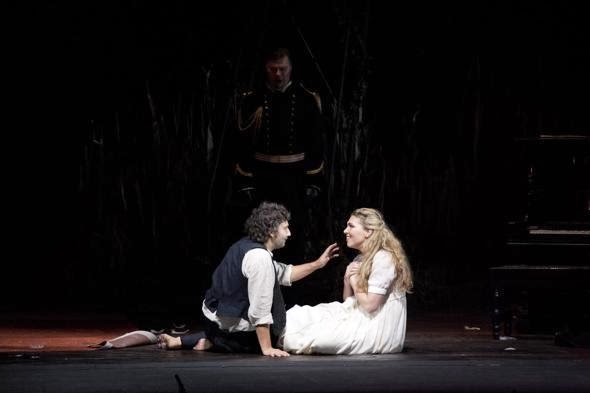
Jonas Kaufmann & Anja Harteros
Photosource
Some sweet soul has shared the Bayerische Staatsoper version of Verdi's Don Carlo on the Net. Eternally grateful. Completely made my day.

Watched the opening night live webcast little over a year ago, Jan 2012, if I remember correctly. Spellbound then and even more so now. Must have caught me on an extra-emotional moment today, such was the extent of the waterworks. Or maybe I just understood it deeper now. The first time most of the energy is usually spent on just concentrating on trying to make out what's happening. Especially without surtitles. And in a really foreign language like Italian. I so wish I knew more than your average culinary terms. Not much of an assistance on opera world ;)

Munich boasts a shining stellar cast for this Don Carlo. The title role of a disillusioned Spanish prince is sung by their very own superstar-tenor Jonas Kaufmann. Soprano Anja Harteros portrays Elisabeth, Princess of Valois, France, his love interest (and, incidentally, the king's, too, for that matter!). King Philip II is the ever-dapper bass René Pape, this time sporting a greyed do to heighten the age difference. The moving and motivating role of Rodrigo, Marquis of Posa, is sung here by baritone Boaz Daniel, though the original cast list would have had Mariusz Kwiecien onstage. He was indisposed at the time, sadly. Russian mezzo Anna Smirnova plays Princess Eboli, Elisabeth's opportunistic lady-in-waiting. The frightening and awe-inspiring role of the Grand Inquisitor is most efficiently boomed by an American bass Eric Halfvarson.

What struck me visually the most the first time I saw this Don Carlo, and even now, was how dark the stage is most of the time. You get used to it as the story goes on, and there are some brighter, or rather, more colourful moments. But as a whole, it is a very dark set. The stage is lit indirectly, light mostly coming from the doors to the sides and back. The only sources of light onstage are a few candles, and a pyre on Act 3, Scene 2. Much of the general absence of light is also due to the costumes being almost solely black. The Grand Inquisitor is just about the only character who has colour. His robes are of ecclesiastical purple. The King and Queen do wear red and gold ceremonially, but even their costumes have black as a base colour. This lightlessness is probably there to add to the general grave and gloomy mood of the piece. Point achieved. But couldn't the performers have had a tad more colourful or brighter outfits, if only to better distinguish them from the black background? Now it sometimes seemed that all I could see were floating faces and hands. Furthermore, the whole of Act One, the Fontainebleau scene, is staged under blue light. Deep in the forest? Night time? That's what it suggests. Ok, with gritted teeth, if it says so in the libretto. But the blue light makes distinguishing a tricky task and frankly does not really caress the features of even such beautiful people as Ms. Harteros and Mr. Kaufmann. A lot of rather unpleasant shadows.. Hmm, would have had second thoughts as a director / set designer (or whoever is responsible for them lights) on that.

Musically I have no complaints. Beautiful tunes. Splendid score. Lovely lines. Melancholy feel no doubt also strikes a special chord on Scandinavian ears. Like this very, very much. Might even be my favourite Verdi. The performers do well, too, especially the three principal ones.


Rene Papè & Eric Halfvarson
Photo: Bayerische Staatsoper / fotogallerie
Mr. Pape in his King's lament of unrequited love at the beginning of Act 4 ("Ella giammai m'amò!") is thoroughly believable and touching, and his bursts of jealousy ring true. The King is not really very likable a character. I mean, it's a dirty rotten thing to snatch away your son's fiancée. Couldn't help but wonder what's wrong with him. Where's his father's love? Is it because the Infante was of his previous marriage? Too painful to remember perhaps? Or is it rivalry, the young vs. the old? Reluctance to pass on the reign, to let go of the status? Or is he simply a pawn on a political game run by the Grand Inquisitor? There are glimpses of a better relationship between father and son, but then the King gets bullied by the church again and falls to his former ways. To his credit though, he does show emotion and remorse on his son's destiny in the end.

Ms. Harteros as Elisabeth did a compelling job. She may not be your absolute top of the litter actress expressively (one invariably feels she's holding something back), but boy she has a beautiful voice. Elisabeth's last act aria ("Tu che le vanità") was breathtaking in its exquisite sad tenderness and beauty. Lovely, lovely! Mind you, her somewhat demure stage presence seemed to fit well with the regal Princess/Queen. And her Act 4 swoon, after finding out it was the King who had the jewel case, was rather convincing. With Don Carlo, though, you'd have thought she'd showed a bit more heart and soul.. it was, after all, he who she loved. Or maybe it is just a case of growing pale in comparison to..

Mr. Kaufmann, then. Well, what can I say.. other than he spoils you rotten. Again. I suppose one has grown accustomed to him being superb. He never fails. His portrayal of the characters is always honest and true. It always seems well proportioned, he never gets over the top. There's hardly ever anything lacking and more than often he leaves the listener/watcher with abundant food for thought. World class. Top notch. Definitely. So is the case with Don Carlo, too. Extremely beautiful, utterly believable. The complex, torn and taunted Prince can't be the easiest to portray. I'm always a bit bewildered how come he so suddenly turns his attentions to politics and seems to forget Elisabeth. Which he, of course, after all does not. I think there's love and longing for Elisabeth till the very end even though he tries to soldier on with 'better' thoughts. He seems so perplexed and, frankly, lost. Holding on to the only tangible, plausible cause he can. Poor boy. 

Boaz Daniel & Jonas Kaufmann
Photo: Bayerische Staatsoper / fotogallerie
Back to singing.. Two of my favourite duets come from this opera: the powerful "Dio che nell'alma infondere" (Don Carlo and Rodrigo, Act 2) and the breathtakingly lovely "Ma lassù ci vedremo" (Elisabeth and Don Carlo, at the end of Act 5. Note! the link takes us to "È dessa.." when DC and E meet at Act 5, "Ma lassù.." starts at 06:41). The first always runs chills down my spine -good chills! not terrifying or bad ones!- for being so strong and heroic and potent. It's a battle cry for all causes good and worthy and a celebration for brotherly love. It gets you to stand up for your rights and crave for liberty. Messrs Kaufmann & Daniel version is slightly wavering rhythmically in places, but brilliant acting-wise. Love the touchy-feely warmth and Kaufmann's bewildered look at the end, where Rodrigo puts forth his hand and Don Carlo is hesitant whether to take it or not. "Ma lassù.." sends tears streaming down my cheeks, for being sooo beautiful and sad. Mr. Kaufmann and Ms. Harteros's performance is special to a tee. Very delicate and soft. Almost whisper-like. As if they're testing how soft a sound is still audible.. Spellbinding and very, very moving. And all the more effective while they are on the opposite sides of the stage, their movements as if mirroring each other. The best possible icing on the cake. 

Noticed that Don Carlo plays at Salzburg this summer. Starring Mr. Kaufmann and Ms. Harteros, Thomas Hampson as Rodrigo and our own Matti Salminen as the King. Sold out, of course, but when pigs fly.. and there were cancellations ;)

lauantai 8. joulukuuta 2012

Lohengrin, antisankari Graalin varjosta - anti-hero from the shadow of the Grail

Jonas Kaufmann ja Anja Harteros
http://i.telegraph.co.uk/multimedia/archive/02418/lascala_2418793b.jpg
Scroll down for English..

Korvissa juuri Richard Wagnerin Lohengrin La Scalasta, Milanosta. Livelähetys Italian Radio3:n kanavalla. (Tai oikeammin, kun tämän julkaista ehdin, soi korvissa jo nauhoite eilisillan esityksestä, tällä kertaa Tanskan klassisen radiokanavan taajuudelta ;)) On itse asiassa mukava vain kuunnella. Liikkuvan kuvan informaatio vie kuitenkin aina suurimman osan huomiosta. Nyt saattaa samalla kirjoitellakin.

Lohengrinin olen kuullut ja nähnyt aikaisemmin tallenteena Münchenistä, Baijerin valtionoopperasta vuodelta 2009, jolloin pääosissa olivat Jonas Kaufmann sekä Anja Harteros, kuten nyt Milanossakin. Tosin Harteros ei tämän illan esityksessä laula sairastumisen vuoksi. Elsan osaa laulaa saksalainen sopraano Annette Dasch. Pidän enemmän Harteroksesta. Toivottavasti hän paranee pian. Kuingas Heinrichinä on René Pape, niin ikään tuttu ääni entuudestaan. Vahva, sointuva basso. Muissa rooleissa laulaa minulle uusia tuttavuuksia; Friedrich von Telramundina islantilainen baritoni Tomas Tomasson ja tämän vaimona Ortrudina dramaattinen saksalaissopraano Evelyn Herlitzius. Orkesteria johtaa Maestro Daniel Barenboim, ohjauksesta vastaa Klaus Guth.

En ole kovin laajasti Wagnerin ooperoihin vielä tutustunut. Lohengrin tuntuu helpoimmin lähestyttävältä, ei niin raskaalta ja pitkältä kuin monet muut. Aihepiirikin on tuttu ja kiinnostava. Olen aina tuntenut suurta mielenkiintoa Graalin tarua kohtaan.Tässä sitäkin sivutaan. Lohengrin on romattinen tarina neidosta pulassa, demoiselle en détresse, jonka avuksi rientää uljas ja hyvä, ettensanoisi pyhä ritari, joka totta kai vielä rakastua rämähtääkin neitoon suunnilleen ensi silmäyksellä. (Synopsis englanniksi) Klassista ritariromantiikkaa siis. Juu, sitäkin. Mutta myös hyvin paljon enemmän mitä päältä katsoen luulisi.

Satuin nimittäin löytämään Jonas Kaufmannin haastattelun, jossa hän valottaa roolinsa rakentamista varsin kiintoisalla tavalla. Hän ei luonnollisesti niinkään puhu työn alla olevasta La Scalan produktiosta, vaan Lohengrinistä teoksena ylipäätään, sekä aikaisemmin 2009 ja 2010 esittämistään Münchenin ja Bayreuthin versioista. Esimerkit ovat Richard Jonesin Müncheniin ohjaamasta produktiosta. En tiedä lieneekö kuinka epätavallista, että laulaja ruotii julkisesti roolihahmoaan, mutta ehdottoman mielenkiintoista se ainakin katsojan kannalta on. En panisi pahakseni vaikka saisin aina oopperakokemuksiini tällaista sisäpiiritietoa.

Itse en juurikaan pitänyt Münchenin version näyttämöratkaisuista. Luulen, että olisin halunnut nähdä hieman enemmän romantiikkaa ja kauneutta, edes asuissa. Lauluissa ei sen sijaan ollut mitään vikaa. Eikä hahmoissa sinänsä. Paitsi aika puisevaa ja jäykkää oli näytteleminen kauttaaltaan, oletan että ohjauksellisista syistä. Välillä sitä raapi päätänsä ja mietti, mitä ohjaaja kenties valinnoillaan halusi sanoa, mitä minun katsojana pitäisi ymmärtää.. Etenkin silloin kun ohjaajan näkemys tarinasta tuntui vievän kovin kauaksi musiikin ja tekstin kokonaisuudesta. Olisi ehkä ollut parempi nähdä alle jokin perinteisempi näkemys, jolloin tarinan jo tuntien, olisi helpompi niellä modernitkin tulkinnat. Mutta kuten sanottua, musiikkia ja laulusuorituksia ei himmentänyt mikään.

Tähän päivään ja La Scalan Lohengriniin palatakseni. Kuulohavainnon perusteella arvioiden, varmaankin Kaufmannin toistaiseksi paras roolisuoritus. Pidin hyvin paljon jo Münchenin esityksestä, joka oli mielestäni erittäin kaunista laulamista, runollista ja herkkääkin. Ajattelin, ettei sitä paremmin tätä roolia voi laulaa. Luulen erehtyneeni. Tämä uusi tulkinta on, mikäli mahdollista, vielä parempi. Kaufmann tuntuu olevan täydellisesti kotonaan osan kanssa. Laulaa kuin äänensä olisi tehty sitä varten. Puhtaasti ja varmasti, vailla vähäisintäkään epäröintiä tai haparointia missään vaiheessa. Komeaa ja uljasta, uskottavan sankarillista. Mutta ei lainkaan sitä 'mylvintää' mistä olen kuullut monia Wagner -laulajia kenties stereotyyppisestikin syytettävän. Kaufmann laulaa Lohengrininsä hänelle tunnusomaisella loistavan soljuvalla legatolla. Lisäksi Wagnerin sävelissä tuntuu kuin hänen äänensä tummemmat sävyt pääsisivät oikeuksiinsa paremmin kuin ikinä ennen. Eniten pidän niistä kohdista, missä hän, kuten haastattelussa mainitsi, saa ilmentää supersankarin inhimillisempiä puolia. On kuin äänensä olisi niissä ilmaisussaan tehokkaimmillaan. Tunteet kuuluvat, niin uskomattomalta kuin se kuulostaakin. On hienoa havaita omin korvin kuinka, juuri kuten hän haastattelussa kertoo, Lohengrin laulaa ikään kuin kahdella rekisterillä, supersankarin vahvalla, voimakkaalla 'työminällä' ja Elsaa puhutellessaan pehmeämmällä, intiimillä, rakastuneella, yksityisemmällä minällä. Ja kuinka nopeasti, jopa kesken säkeen, Kaufmann kykenee tuota rekisteriä vaihtamaan. Nousee hattu. Käsittämättömän hienovaraista ilmaisua, syvällisestä roolin tuntemuksesta puhumattakaan.

Kirkkain helmihetki (ja jälleen todellakin vain hetki, yksi sana..): Gralserzählungissa, kun Lohengrin kertoo taivaasta laskeutuvasta kyyhkystä. Tuo sana (saksaksi Taube) ja kuinka Kaufmann sen laulaa.. pitkittäen tavuja, pehmeästi ja valtavan herkästi, miltei hauraasti. Ylimaallisen kaunista! Stole my heart away right there and then. Enkä varmasti ollut ainoa!

René Papen uljas basso sopii hyvin kuningas Heinrichin rooliin. Ei tarvitse kuulijana lainkaan pelätä, etteikö hän tehtävästään selviäisi. Vieläpä with flying colours! Scalan uutisista sain tietää, että Annette Dasch oli todellakin hyvin viime hetken sijainen Elsan rooliin. Paitsi Anja Harteros, myös hänen varanäyttelijänsä oli sairastunut juuri ensi-illan alla. Dasch tuli Milanoon päivää ennen ja ehti käydä pikaiset keskustelut sekä ohjaajan että orkesterinjohtajan kanssa. Tätä taustaa vasten, hän suoriutuu osastaan todellakin mallikkaasti. Dasch on laulanut roolia aikaisemmin Bayreuthissa, silloinkin yhdessä Jonas Kaufmannin kanssa. Alussa hänen äänessään oli havaittavissa hiukan kireyttä, mutta oopperan edetessä ilmaisunsa vapautuu ja paranee. Hän laulaa miellyttävän selkeästi artikuloiden. Lämmennyt äänensä soi myös varsin kauniisti, eivätkä korkeatkaan sävelet tuota ongelmaa. Ortrudin ja Telramundin esittäjistä en kummastakaan erityisemmin laulajina pitänyt. Paikoittain falskihkoa, ja liikaa vibratoa minun makuuni.

Kokonaisarviota ja näköhavaintoja odotellessa esityksen traileri maistiaisiksi.


- - - -

Listening to Wagner's Lohengrin from La Scala, Milan, live on Italian Radio 3. (Or rather when I post this it's a recorded broadcast from yesterday's performance, this time on Danish Classic Radio ;)) It's nice just to listen to. Pictures always tend to hold most of your attention, moving pictures especially. Now there's even time to write.


Kaufmann - Pape - Dasch
Source: http://amfortas.wordpress.com
I've seen and heard Lohengrin before, on tape, the Bavarian State Opera production in Munich in 2009. Leading roles sung by Jonas Kaufmann and Anja Harteros, as today, too. Though due to illness Ms. Harteros doesn't appear on stage today. Instead Elsa is sung by another German soprano, Annette Dasch. I prefer Ms. Harteros. Hope she'll get well soon. René Pape, another familiar voice, sings King Heinrich. I like his strong, solid bass. Other singers are new to me; an Icelandic baritone Tomas Tomasson depicting Friedrich von Telramund and a dramatic German soprano Evelyn Herlitzius as Ortrud, his wife. At the pit Maestro Daniel Barenboim, Klaus Guth as a director.

Have so far got to know only a handful of Wagner operas. Lohengrin seems easiest to make friends with, not as heavy and lengthy as many of them. The subject matter is also somewhat familiar and very interesting. I've always been interested in the Grail-lore. Here it's a sub story, but still. Lohengrin is a romantic story of a damsel in distress who is aided by a valiant, good, almost holy knight who, of course, ends up falling for her at first glance. (Find the synopsis here) A classic tale, so to speak. Yes, that too, but a lot more than meets the eye.

For I happened across an interview with Jonas Kaufmann where he talks about building this character in a most fascinating way. He naturally doesn't talk that much of the role at hand (the La Scala production) as of Lohengrin in general and of his previous productions at Munich in 2009 and Bayreuth in 2010. The clips are from the Munich production, directed by Richard Jones. I don't know how usual it might be for a singer to dissect his/her role publicly so openly.. for a listener/watcher it is very interesting! I wouldn't mind having such insights to a role more often.

I wasn't that keen on how the Munich production was staged. I think I'd have preferred a little more romance and beauty, at least in costumes. The singing was all great and the characters as such. Although acting was rather wooden and stiff most of the time. Lack of direction probably. At times I was scratching my head trying desperately to understand what the director wanted to say.. especially when there seemed to be clashes with his and the composer/writer's views. It might have been a good idea to see first a more traditional version of the story, then a modern one like this had perhaps hit home more easily. But as I said, music and singing, they were impeccable.

Coming back to La Scala Lohengrin. Quite probably Kaufmann's best performance in the role so far, judging by hearing only. Liked him very much in the Munich version already. He sung most beautifully and gave a highly sensitive and poetic performance. The best there could be, I thought. Now I believe I was wrong. This new rendition is, if possible, even better. He seems to be completely at ease with the role. Sings as if it was made for him. Clear and impressive, without a slightest hesitation or fumble anywhere. Magnificent, noble, heroic like no other. Not a hint of that "bellowing" of which I've heard many Wagner-singers perhaps stereotypically being accused. Kaufmann sings his Lohengrin with the same exquisitely beautiful line and legato he is so well known of. In Wagner it seems the darker tones of his voice come into their own like never before. I like best the moments where he, as he mentioned in the interview, can portray the human in the hero. It's like his voice is in those at its most expressive. The emotions are audible, as amazing as that is! It's great to witness with one's own ears how, as he tells in the interview, Lohengrin sings as if with two different registers; the strong, powerful one of a superhero on duty and the softer, more intimate and affectionate private one when he addresses Elsa. And how smoothly Kaufmann can switch between those registers, even within a phrase. I tip my hat! Incredible subtlety, indicating the profound understanding of the character.

The gem moment (literally a moment, just one word..): in Gralserzählung (the Grail Narration) when Lohengrin tells about the dove descending from heaven. The word 'dove' (Taube in German), and the way Kaufmann sings it.. lengthening the syllable infinitely, softly, ultra-tenderly, almost insubstantially.. Out of this world! Sooo beautiful. Stole my heart away right there and then. And for sure I was not the only one!

René Pape with his impressive bass was well suited to the role of King Heinrich. No worries as to if he'd be up to the task. With flying colours! I found out in the Scala News that Annette Dasch was indeed a very last minute stand-in as Elsa. Besides Anja Harteros, also her double had fallen ill just before the premiere. Ms Dash arrived Milano the day before and had time for brief discussions with both the director and the conductor. Taking that into consideration, she really did a commendable job. She has sung Elsa before in Bayreuth, there too alongside Jonas Kaufmann. At first her voice seemed slightly tense but as the opera went on her voice warmed and opened up. She sings with a pleasing clarity in diction. Her warm voice rings quite beautifully, including the effortless high notes. I didn't particularly like either Ortrud or Telramund. A tad too many screeches and too much vibration to my liking.

While waiting for the live webcast, here's an appetizing trailer.

keskiviikko 31. lokakuuta 2012

Kuolettava kolmiodraama á la Puccini: Tosca - The Deathly Love Triangle á la Puccini

Scroll down for English..

Giacomo Puccini: Tosca 
Baijerin valtionooppera, München, 25.10.2012.

Rooleissa:
Floria Tosca (kuulu laulajatar) - Tatiana Serjan, sopraano
Mario Cavaradossi (taidemaalari, Toscan rakastettu) 
- Jonas Kaufmann, tenori
Paroni Scarpia (salaisen poliisin päällikkö) 
- Scott Hendricks, baritoni
Cesare Angelotti (poliittinen vanki, Rooman tasavallan entinen konsuli) - Goran Juric, basso
Sakristaani - Christoph Stephinger, basso
Spoletta (Scarpian apuri) - Francesco Petrozzi, tenori
Sciarrone (Scarpian alaisia) - Christian Rieger, baritoni
Vanginvartija - Tim Kuypers, baritoni
Paimenen ääni - solisti Tölzin poikakuorosta

Mestari Puccinin eräs suosituimmista oopperoista pohjautuu ranskalaisen näytelmäkirjailijan Victorien Sardoun teokseen La Tosca. Näytelmän taustalla ovat todelliset historialliset tapahtumat: ranskalaisten lyhyt valtakausi Roomassa (Rooman tasavalta 1798-1800), Napolin kuningaskunnan valta kaupungista sekä Napoleonin toinen sotaretki Italiaan ja Marengon taistelu. Tosca myös sijoittuu todellisille, nykyäänkin olemassaoleville paikoille, Sant'Andrea della Vallen kirkkoon, Farnesen palatsiin ja Castel Sant'Angelon linnoitukseen. Draama eletään kahden päivän aikana, kesäkuussa 1800. Juonitiivistelmä englanniksi. 

Pidän Toscasta paljon, paitsi tunteikkaasta ja jännittävästä tarinasta, niin etenkin upeasta musiikista. Hittiaarioita on toinen toisensa perään, varsinkin pääparin tenorilla ja sopraanolla. Tarina oli jo tuttu, siksi usein dvd-taltiointeja on tullut katseltua. Uskalsin siis lähteä Toscan livenä kokemaan, vaikka tiesin etten tekstistä aivan kaikkea ymmärtäisikään (lauletaan italiaksi, tekstitys saksaksi). Suurin magneetti minulle oli luonnollisesti suosikkitenorini Jonas Kaufmann.

Eikä tarvinnut pettyä. Ei enempää hänen tulkintaansa, kuin muidenkaan laulajien. Harvinaisen tasaisen hyvä esiintyjäkaarti, pienintä paimenosaa myöten (jossa muuten sivumennen sanoen loisti äärimmäisen kaunisääninen poikasopraano/altto. Karvamittari pelasi!). Koko produktiosta tuli ylipäätäänkin tunne, että kaikki oli hyvin mietittyä, harkittua, hyväksi ja toimivaksi havaittua - riskitöntä kenties, saattaisi joku ajatella, mutta samalla erinomainen jalusta sille, mikä oopperaesityksissä on mielestäni tärkeintä: musiikin lumovoimalle. Tätä produktiota ei oltu tärvelty yliampuvalla tai liian paljaaksi riisutulla lavastuksella, vaan kaikki tuki tarinaa ja tuntui luonnolliselta. Laululle ja musiikille jäi tilaa, juuri niinkuin pitääkin.

Nimiroolia lauloi minulle uusi sopraanotuttavuus, venäläinen Tatiana Serjan, ja erittäin hyvin lauloikin! Kaunis, selkeä, voimakas ääni. Pidin paljon siitä, että hän ei sortunut missään vaiheessa ylitunteellisuuteen, tulkinnan, liikkeiden ja eleiden silti ollessa aidon oloisia. Vissi d'arte, Toscan kenties tunnetuin aaria, oli hänen laulamanaan todella kaunis. Puhdas ja vaivaton. Ja hyvin, hyvin liikuttava. Paras versio mitä olen tähän mennessä saanut kuulla.

Kaufmannia kuulin nyt ensimmäistä kertaa livenä oopperassa. Hassua, kuinka äänensä vaikutti ensiksi jotenkin pienemmältä, mitä mielikuvissani muistin. Hämmästyttävän hyvin silti kaikki kuului, hiljaisinta pianissimoa myöten. Ääni saavutti korvani ehkä välimatkasta johtuen (istuin permannon perällä) hieman pehmeämpänä ja pyöreämpänä, mutta yhtä kaikki hyvin miellyttävänä. 

Ensimmäisen näytöksen Recondita armonia oli uljas, selkeä ja rento, vaikka epäinhimillisen aikaisin laulettavaksi tuleekin. Rakkausduetto Toscan kanssa oli sopivan leikkisä ja tunteellinen, tosin hieman jäin kunnon pusutteluja kaipaamaan. Ei ilmeisesti kuulunut tähän kässäriin, tai oltu tämän partnerin kanssa sovittu.. ;) Mukavan lämpimästi ja läheisesti he toki kylkimyyryssä kiehnäsivät, jotta vallan uskottavasti välittyi lempi katsomoonkin saakka. Dueton loppupuolen silmienylistys (Qual' occhio al mondo) ja rakkaudenvannomiset (Mia Tosca idolatrata - Mia vita, amante inquieta) ovat kuin klassista Prince Charming -kamaa; suurta tunnetta, ja vahvasti, sankarillisesti sekä taidolla tulkittuja. 

Toisessa näytöksessä, tunnelman kiristyessä Scarpian päämajassa, saa Cavaradossikin tilaisuuden laajentaa tunneskaalaansa. Illan showstopperia ei tarvinnut enempää odottaa, se tuli tässä: suorastaan veretseisauttava vapaudenjulistus Vittoria!, Vittoria!, kun saapuu tieto Napoleonin voitosta Marengossa. Mikä voima! Mikä tunne! Joka solunsa eli juuri sitä hetkeä, tunnetta, ääntä. Selkäpiissäni juoksi hiiri ja ruoto suoreni vaistomaisesti sitä kuunnellessa. W-a-u! Harmi ettei libretossa ole tuossa kohtaa luonnollista taputustaukoa, sillä tässä jos missä olisi huoletta saattanut pompata seisaalleen ja hurrata esteettömästi. Ja pitkään! Kuinkahan mustia mulkaisuja saisi osakseen, jos seuraavalla kerralla herättäisi paheennusta hurjilla tuuletuksilla ja kiljunnalla ;)

Kolmannessa näytöksessä saan aina huokaillen nieleskellä kyyneliä, niin nytkin. E lucevan le stelle on niin riipaisevan kaunis ja surullinen, sitäpaitsi yllättävän suora ja rohkeakin! Myöhemmin, pidellessään Toscan voitokkaita mutta suloisia käsiä, miten herkästi ja hellästi Kaufmann laulaakaan O dolci mani, mansuete e pure. Ja minä sulan. Vajoan nirvanaan. Miltei tipahdan tuolilta. Kuinka kukaan  v o i  laulaa noin kauniisti!! Täydellistä mannaa korville! Koskettavinta koko tarinassa on se, kun Cavaradossi (ja yleisö) tajuaa, ettei Scarpian Toscalle lupaama valeteloitus toteudu, vaan että piipuissa tulee olemaan oikeat kudit. Ja kuinka hän sitten ei eleelläänkään paljasta tätä Toscalle, vaan myötäilee tämän iloa vapaudesta ja unelmia yhteisestä ihanasta tulevaisuudesta. Kaufmannin hienovarainen, älykäs tulkinta tekee Cavaradossin roolista syvällisen ja entistä uskottavamman.

Julman ja sadistiseksikin mainitun paroni Scarpian roolia lauloi yhdysvaltalainen baritoni Scott Hendricks. Uusi tuttavuus minulle niin ikään. Hänen Scarpiansa ei ehkä ollut niin uhkaava kuin muutamat muut kuulemani, tai taltioinneilta näkemäni, mutta itse asiassa hyvin hämmentävä. Tämän Scarpian pahuus oli ennemminkin salakavalaa kieroilua ja vaivihkaista juonittelua, kuin suoraa ja mustavalkoista. Hän onnistui ajoittain melkein jopa herättämään sympatiaa! Häiritsevää, mutta äärettömän tehokasta. Pisti ajattelemaan. Laulullisesti Hendricks pärjäsi oikein hyvin, ensimmäisen näytöksen Va, Tosca! jäi ehkä hieman vaille kaipaamaani pahaenteistä jylyä. Tosin luulen, ettei se ollut hänen vikansa. Orkesteri taisi innostua aavistuksen liikaa. Loppua kohti Hendricks paransi kuin hepo juoksussa. Kuolinkohtauskin oli sopivan lyhyt. En kuulu siihen koulukuntaan, jonka mielestä mitä pidempään hurmeessa kidutaan ja voihkitaan, sitä parempi. Moinen kallistuu minun silmissäni iisisti ylitulkinnan puolelle, varsinkin jos voihkintaa on runsaasti. Kaikenkaikkiaan positiivisen erilainen, ajatuksia herättävä tulkinta Hendricksiltä. Pidin paljon, jos sellaista voi inhasta Scarpiasta sanoa.

Hienon oopperailtani kruunasi varsin miellyttävä yllätys. Bongasin nimittäin oopperatalon kaupasta Kaufmannista kirjoitetun 2010 ilmestyneen elämäkerran "Meinen die wirklich mich?" (linkissä kirjan arvostelu englanniksi). Saksan kieli asettaa jonkin verran haasteita, mutta luulen, että aiheen kiinnostavuus auttaa ylittämään ne, sanakirjan suosiollisella avustuksella. Sokeriksi pohjalle sain vielä kirjaani nimikirjoituksenkin, kun tieni hotellille sattui kulkemaan sopivasti näyttämösisäänkäynnin vieritse. Tarpeetonta lie todetakaan, että askeleeni kotiin oli kepeä ja hymy leveä. Felt I could have conquered the world :)

- - - - - - -

Giacomo Puccini: Tosca
The Bavarian State Opera, Munich, 25 October 2012.
Serjan - Kaufmann
Photo: BSO/Hösl, Source: Online Merker


Roles:
Floria Tosca (a celebrated singer) - Tatjana Serjan, soprano
Mario Cavaradossi (a painter, her lover) - Jonas Kaufmann, tenor
Baron Scarpia (chief of secret police) - Scott Hendricks, baritone
Cesare Angelotti (political prisoner, former Consul of the Roman Republic) - Goran Juric, bass
Sacristan - Christoph Stephinger, bass
Spoletta (Scarpia's right-hand man) - Francesco Petrozzi, tenor
Sciarrone (on Scarpia's payroll) - Christian Rieger, baritone
Jailer - Tim Kuypers, baritone
Shepherd boy - a soloist from the Tölzer Knabenchor, alto

One of Puccini's best loved operas is based on Victorien Sardou's dramatic French play La Tosca and is set in Rome. Behind the story lie real historical events: the short period of French rule in Rome (Roman Republic 1798-1800), the Kingdom of Naples' hold over the city, Napoleon's second campaign over Italy and the Battle of Marengo. Furthermore, Tosca takes place in actual places in Rome, seen there also today: the church of Sant'Andrea della Valle, a High Renaissance palace Palazzo Farnese and the Castel Sant'Angelo, then a fortress now a museum. The drama is played during two days in June 1800. Here is the synopsis in English.

I like Tosca very much. The exciting and emotional story and most of all the glorious music abundant with popular arias especially for the principal soprano and tenor. The story-line was familiar to me, after seeing Tosca several times on DVD, so I gathered my wits and ventured to see it live, even though I knew I wouldn't understand all as it was sung in Italian with German surtitles. The greatest attraction by far to me was my favourite tenor Jonas Kaufmann.

I did not have to be disappointed. No more with his interpretation than with singers in other roles. An extraordinarily good cast, down to the tiniest role of the shepherd boy (in which shone a truly beautiful boy soprano/alto. Goosies!). The whole production, I felt, was well thought over, effective and efficient leaving excellent room for what for me in an opera performance is the most important thing: the musical enchantment. The setting was neither exaggerated nor stripped to the bare minimum, rather everything was there for a reason, seemed natural and supported the story as it should.

The title role was sung by a Russian soprano Tatiana Serjan, whom I had not heard before. She was very good. She has a beautiful, clear and strong voice. Her acting was also enjoyable. She never went overboard or overemotional, her interpretation, moves and gestures were all the time unaffected and true. Tosca's most famous aria, Vissi d’arte, was exceedingly beautifully sung. Effortless and immaculate and very, very moving. The best version I’ve heard so far.

Kaufmann I heard now for the first time live on stage at an opera. Funny how his voice seemed at first smaller than I’d thought, although it carried amazingly well, even the most delicate pianissimi. Due to distance perhaps (I was seated far at the parterre) his voice reached me slightly softer and rounder, but altogether extremely enjoyable.

Act 1 Recondita armonia was noble, soaring and relaxed, even though it comes so inhumanly soon in the Act. It’s the first Cavaradossi sings after having stepped on stage just a few minutes before. The love duet with Tosca was appropriately playful and emotional, though I was slightly missing some proper smooching. Apparently not part of today’s script or been settled with this partner.. ;) Nice and comfy and cozy and snug they were with each other, so yes, "the Love" came through credibly enough. Towards the end of the duet, him praising her eyes (Qual’ occhio al mondo) and vowing his love for her (Mia Tosca idolatrata – Mia vita, amante inquieta), those are the classic Prince Charming -moments; grand emotions, presented today with perfect heroic intensity and oh boy, what a flair! The man is phenomenal! Impeccable!

In Act 2 as the plot thickens at Scarpia’s headquarters, Cavaradossi also gets to broaden his emotional palette. The showstopper of the evening came here: the plaster-crumbling chandelier-shattering cry for freedom Vittoria!, Vittoria!, as news of Napoleon’s victory at Marengo reach the party. Such power! Such passion! Every fiber of his being resonated that moment, that feeling, that sound. I sat up instinctively shivers running down my spine. W-o-w! Too bad there isn’t a pause at the libretto there, because at that moment, if any, one could easily have jumped up cheering uncontrollably with no apparent end. Wonder how many glares one would gather if next time one were to cheer, stomp and scream wildly ;)

I frequently spend Act 3 of Tosca sighing heavily and fighting back tears. So was the case this time, too. E lucevan lestelle is so heart-wrenchingly beautiful and sad, not to mention surprisingly frank, even daring! Later, as Cavaradossi is holding Tosca’s victorious yet sweet hands, how tenderly and lovingly Kaufmann sings of them O dolci mani, mansuete e pure. And I melt away. Sink into oblivion. Fall of my seat. Almost. How is it possible to sing so beautifully!! Manna to my ears! What is more, and most touching, is that when Cavaradossi (and the audience) realizes that the fake execution Scarpia promised Tosca is not going to happen but there will be real bullets in the barrels instead. And how he then never, not in the slightest shows this to Tosca, but goes with her joy of their freedom and her dreams of their wonderful future together. Kaufmann’s subtle intelligent reading makes Cavaradossi a profound and ever more credible a character.

The role of cruel and sadistic Baron Scarpia was sung by an American baritone Scott Hendricks. Never heard him before either. Hendricks’ Scarpia was perhaps not as threatening as the ones I’d witnessed on tape before, but rather baffling instead. This Scarpia's wickedness was more a treacherous double-talk and scheming on the sly as downright pureblood evil. At times he even managed to make you feel for him! Very disturbing! Very effective, too. Food for thought. Singing-wise Hendricks did rather well, Va, Tosca! in Act 1 was perhaps not quite menacing enough to my liking. Although, it wasn’t down to him alone, the orchestra got slightly carried away there, I think. Towards the end Hendricks got better. Luckily the death scene was suitably short. I’m not one of those who think the longer the groaning and the gory wallow the better. I tend to consider that exaggeration. Especially if there’s plenty of groans and moans. All in all, a positively different thought-provoking portrayal of Scarpia. Liked it a lot, if you can say that of the vicious character.

A pleasant surprise topped off my fancy night at the opera. Namely, I spotted “Meinen die wirklich mich?” at the Opera shop, the 2010 issued biography of Kaufmann (find here a review in English). The German language may set a few obstacles in my way, but I think the interest factor and a dictionary will help me clear them. To crown it all, I got it signed, as my way back to the hotel just happened to go past the stage door. Needless to say my steps home were light and springy, and the smile soooooo wide. Felt I could have conquered the world :)